Art & Design Curriculum at XII Apostles
Art and Design; Subject Leader Mrs Marsden and Curriculum Team 1
Intent
Our school’s Mission Statement states:
'Through Learning and Loving we will follow Jesus'
- To place Christ at the centre of everything we do.
- To recognise that each child is unique and to ensure that each child is educated to fulfil their human potential.
- To develop an understanding of Community; being able to recognise, respect and celebrate the diversity of all within it.
Our school’s Mission Statement affirms those beliefs, helps us to keep these beliefs as the basis for everything we do, and gives us the purpose for all our work in Twelve Apostles.
Everyone will matter and be treated with love and will be helped to carry out their special role in God’s World. In order for every child to fulfil their potential, we ensure they experience a broad, balanced and engaging Art and Design curriculum that is accessible to all.
The national curriculum for Art and Design aims to ensure that all pupils:
- Produce creative work, exploring their ideas and recording their experiences
- Become proficient in drawing, painting, sculpture and other art, craft and design techniques
- Evaluate and analyse creative works using the language of art, craft and design
- Know about great artists, craft makers and designers, and understand the historical and cultural development of their art forms.
However, our Art and Design curriculum further intends to celebrate and recognise that each child is unique and encourage them to reach their full potential as artists. We aim for our children to appreciate, experience and engage with all forms the arts and to develop the skills within art to enable them to access a world of possibilities that art can offer them both now and later in their lives. We look to enable our children to understand, appreciate and contribute to a dimension of life that taps into and expresses human innovation, imagination and thought.
Our Art and Design Curriculum builds practical, theoretical and disciplinary knowledge and enables children to develop connections between them.
Substantive knowledge is divided into two key components: practical and theoretical.
Practical knowledge involves understanding of how to use a range methods and techniques, media and materials and covers the fundamental formal elements of art: line, tone, shape, colour, form, pattern, texture.
Theoretical knowledge involves the knowledge of the history of art including significant artists, movements, styles, and cultural contexts; the meanings and interpretations behind works of art that they study and exploring artists’ materials and processes.
This substantive knowledge provides a vital foundation from which children can begin to express themselves with growing creativity, confidence, and independence. Once pupils have a secure grasp of the ‘what’ and ‘how’ of art, they are well prepared to explore the deeper ‘why’—developing their own ideas with purpose and imagination.
Building on this firm foundation, disciplinary knowledge is introduced progressively throughout the school. This strand of learning encourages pupils to think and behave like artists—asking questions, exploring possibilities, interpreting meaning, and responding thoughtfully to what they see and create. Over time, children learn to make considered artistic choices, to reflect on the intent and audience for their work, and to evaluate their process with increasing depth. As they move through each stage of their learning, their ability to think critically, reflect meaningfully, and express their artistic voice continues to grow and flourish.
Implementation
Units of lessons are sequenced to allow children to build their knowledge, applying them to a range of outcomes. The formal elements, a key part of the National Curriculum, are also woven throughout units. Knowledge is built upon year by year, ensuring that children revisit key concepts with increasing complexity in a spiral curriculum model . This progression helps to carefully develop children’s schemata enabling them to make connections, remember more, and apply what they know in new and creative ways.
Units across each key stage are organised into four core areas: drawing, painting and mixed-media (including printing), sculpture and 3D and design.
Each unit is taught through a three-stage process. This is taught as follows:
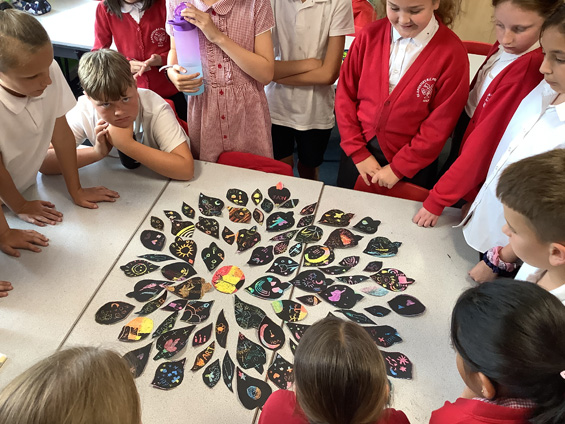
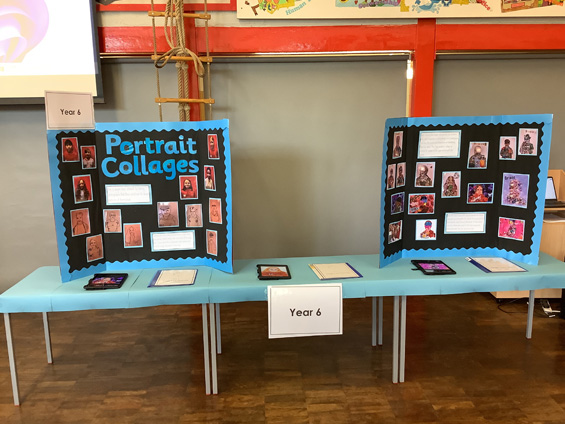
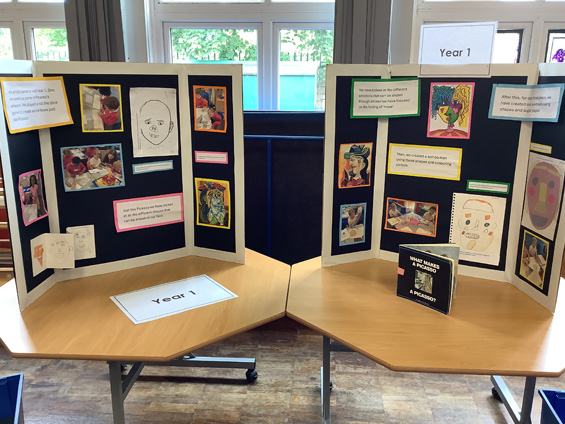
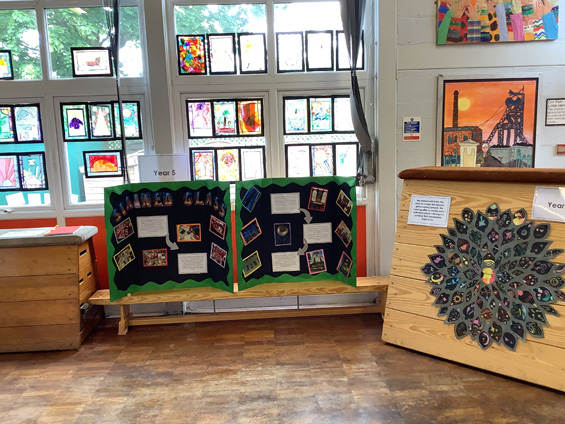
- Exploring and Developing: In this stage, children are given opportunities to explore and discuss the work of other artists and find out more about them or the artistic period. Children collect ideas/research the topic and showcase this in either individual or whole class theme board/collage. Children then explore initial ideas through drawing and sketching. This should take place even if the children are working in 2D or 3D for their final piece.
- Investigating and Making: During this stage, children are given the opportunity to develop their ideas further and plan what they want to create. Children are encouraged to try out different techniques and to apply them to materials and processes. They then create their final piece of work – either individually or collaboratively – evaluating and adapting/changing as they go.
- Evaluating and Developing Work: Children are given time to review what they have achieved, and the work of others, and comment on it saying what they think or feel about it. Children are given opportunities to identify what they might change about their final piece or the process they have been through and what they could do to improve and develop future work.
Art and Design is adapted to meet the needs of individual children taking into account their primary need, making reasonable adjustments and through adaptive teaching.
Reading is woven through every subject including Art & Design, enriching pupils' understanding and deepening their knowledge. Art provides meaningful contexts for reading, while high-quality texts enhance learning and vocabulary in Art and Design. This reciprocal approach supports pupils in becoming confident, curious readers who can access and enjoy the full curriculum.
Throughout their time at XII Apostles, children have the opportunity to work with different artists. For example, during Year 5, the children visit Tattenhall as part of an art residential in which they are led by an inhouse artist over two days to produce artwork. Across school, children are given the chance to visit galleries and museums. This helps to support the children in learning about different artists while also providing them with opportunities to experience different forms of culture.
At the heart of our approach is the belief that every child is an artist. We want all children to feel proud of their creativity, to recognise the value in their own ideas, and to understand that artistic expression is a powerful form of communication. Through a rich and inspiring curriculum, we aim for children to leave our school with a deep appreciation of the arts, the confidence to keep creating, and the knowledge that their skills could lead to a wide range of future opportunities—from design, architecture, and illustration to animation, fashion, and beyond.
Impact:
At XII Apostles, we recognise the unique needs of each child and support them in reaching their human potential. The impact of our Art and Design curriculum is measured in the experiences, confidence and competence of our children within the subject. We ensure children receive the experiences they require, both within and beyond the curriculum, to develop their skills and become confident artists. Children learn about a variety of Artists, Designers and forms of visual art and are given an opportunity to revisit and improve these skills over their time in school.
Art and Design Long Term Plan Overview.